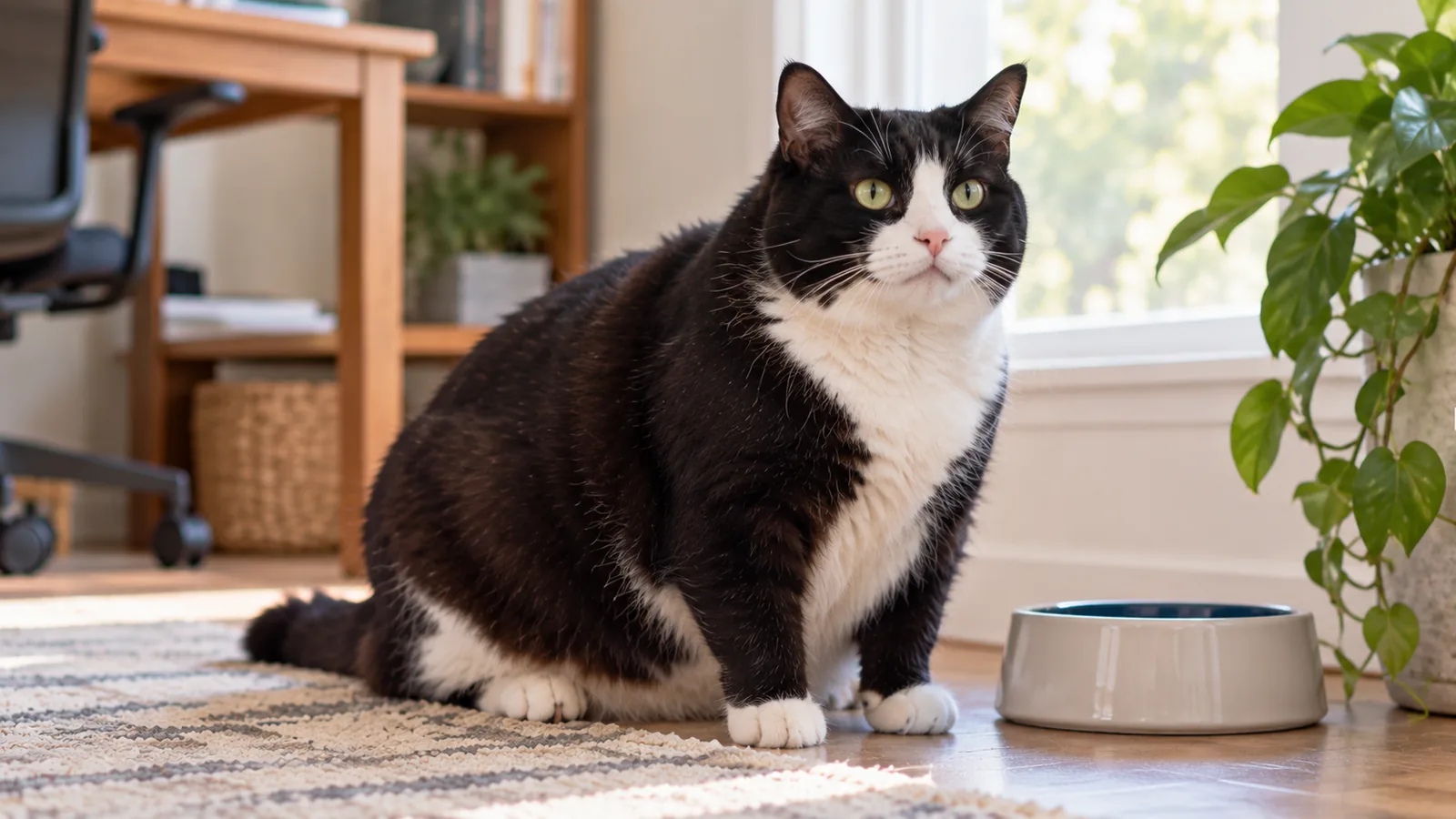
Your pet's food portion should be calculated from their ideal weight, not their current one, because a serving sized to today's number on the scale is precisely the amount that holds them there. The extras count just as much: a 10-pound cat needs only around 200 calories a day, so a few training treats, a dental chew, and a bite of chicken from the counter are not a rounding error. More than half of dogs and cats in the United States are now overweight, and in most homes the cause is not the food itself but the portion and the extras around it. Getting the math right is one of the simplest things you can do to protect your pet's joints and add healthy years.
East Wind Animal Hospital in Willow Grove knows how discouraging it is to do everything right at the food bowl and still hear that your pet needs to lose a few pounds, so we would rather work through the math with you than hand you a number. A wellness visit with us is the easiest place to reset that math, because once we have weighed your pet and checked their body condition by hand, we can set a target weight and a daily calorie budget that accounts for their breed, age, activity, and, yes, the treats. Those needs change as your pet ages, slows down, or spends a winter mostly indoors, so we keep revisiting the target with you instead of treating one number as permanent. If you are not sure the portion in the bowl is the right one, request an appointment and bring the food bag, the scoop you use, and your questions.
Four Things That Decide What Goes in the Bowl
- Two pets can weigh the same and be in completely different shape. We score condition by hand instead of trusting the scale.
- A calorie calculator gives you a starting point, and it works only if you feed toward the weight your pet should be, not the one they're at today.
- Treats, chews, and counter snacks belong under about 10 percent of the day's calories, and most households are well past that without knowing it.
- A sudden change in weight, in either direction, deserves a medical look before anyone changes the food.
How Can I Tell If My Cat or Dog Is Carrying Extra Weight?
Run your hands along your pet's ribs, then look at them from above and from the side. Body condition scoring uses a nine-point scale where a 4 or 5 is ideal, and every point above that represents roughly 10 percent more weight than a pet should be carrying.
Start by standing over your pet and looking straight down. A healthy dog or cat pinches in behind the last rib, in the classic hourglass shape. An outline that runs straight from shoulders to hips has had that curve filled in with fat. Next, crouch to eye level. The underside should climb from the ribcage toward the back legs; a belly hanging parallel to the floor is carrying extra. Finish with your hands, fingers flat on the side of the chest, sliding backward. Ribs like the knuckles of a closed fist mean too thin. Ribs you have to hunt for, the way you'd feel for the bones of your hand through your palm, mean too heavy. Aim between the two: a thin cushion, each rib easy to count underneath.
| Score | What your eyes and hands find | Where that leaves you |
| 1 to 3 | Rib, spine, and hip bones stand out from across the room with nothing covering them | Underweight. Book a visit soon. |
| 4 to 5 | A thin cushion over ribs you can count without effort, a clear pinch at the waist, a belly that climbs toward the hips | Right where you want to be. Hold the current portion. |
| 6 to 7 | You have to press to find ribs, the waist has mostly gone, the underline runs flat | Carrying extra. Portions need trimming now. |
| 8 to 9 | Ribs are buried, no waist at all, fat pads over the lower back and around the tail | Obese. This calls for a plan built with us, not guesswork. |
Fat and muscle tell two different stories. A cat who holds the same weight while losing lean mass is losing ground, and that is the reason we score both.
Score once a month, and watch closely when a coat hides the evidence: a long-haired cat or a well-furnished Golden can gain two pounds unnoticed. We teach the scoring by hand during wellness exams, and you leave knowing what a 5 feels like on your own dog.
Why Doesn't the Feeding Guide on the Bag Work for My Pet?
The chart on the back of the bag is built for an average pet at a maintenance weight, and almost nobody's dog is that average pet. How much to feed depends on age, activity level, neuter status, and body condition. A cup of kibble runs roughly 300 to 500 calories depending on the formula. Switch brands without reading the label and the daily total can move by a third. Twenty extra calories a day, about half a biscuit, works out to a couple of pounds on a dog over a year.
Protein protects lean mass while fat comes off, fat carries the most energy per gram, and fiber adds bulk without much energy, keeping a hungry Beagle from parking in front of you at four in the afternoon. A Greyhound at a healthy 5 looks alarming to someone used to Labradors. Frame differences like that shape the breed-specific preventive care plans we build around the body your pet was born with.
What Numbers Does a Calorie Calculator Need From Me?
Start with three numbers: current weight, a hands-on score of your pet's shape, and the calories per cup printed on the label. A calorie calculator gives you a daily kilocalorie starting point, not a finished prescription, and it's only as accurate as the weight and body condition score you enter.
- Weigh and score: If you don’t have a current weight from our scale, then weigh yourself on a bathroom scale, then yourself holding the pet and subtract. Get a body condition score from us, or from your own measurements.
- Decide where treats live: Run the number twice, once with meals alone and once with everything included. The gap is what's left for extras.
- Measure the same way every time: A kitchen gram scale is most accurate. A heaped scoop can hold 30 percent more than a level one.
- Recheck in two to four weeks: Reweigh, feel the ribs, adjust. A plan that hasn't moved in a month needs a change, not more patience.
Calculators can't see the dog who sprints two miles a day or the cat who sleeps on the radiator all winter, and they can't account for arthritis, a thyroid problem, or a medication that shifts appetite. When the starting number doesn't hold, tell us what you're seeing and we'll turn it into real portions, real timing, and a food you can find.
Where Are the Extra Calories Hiding?
Meals are usually measured. It's everything after the meal that breaks the math, and calories in treats are the most common reason a measured feeding plan stops working.
| The snack | Calories | Share of a 10-lb cat's day (about 200 kcal/day) | Share of a 20-lb dog's day (about 400 kcal/day) |
| A single baby carrot | 4 kcal | Close to nothing | Close to nothing |
| A large dog biscuit | 110 kcal | Past the halfway mark | Just over a fourth |
| One ounce of sliced deli turkey | 30 kcal | Around 15 percent | Less than 10 percent |
| A tablespoon of peanut butter | 95 kcal | Almost half | Roughly a fourth |
| A slice of American cheese | 65 kcal | Roughly a third | Around 16 percent |
Where are the extra calories coming from?
- Training sessions: A puppy class can run through 40 or 50 small treats in an hour, most of a day for a little dog.
- The counter and the table: A bite of chicken, the last spoon of yogurt, a crust of toast. None of it feels like feeding. All of it counts.
- Chews and dental treats: These are food with a label, and the label has a number on it.
- Everyone else in the house: Plans stall when three people each give one treat, all assuming they were the only one.
Swapping is easier than cutting. Green beans, cucumber slices, and plain air-popped popcorn cost almost nothing against the daily total, and most dogs want your attention more than the food. Cats are tougher customers, though a few pieces of their own kibble offered by hand does the same job. If treats have become the main friction at home, reach out and we'll sort out what stays and what goes.
What's the Simplest Way to Keep Treats Under Control All Day?
Keeping treats under control gets simple when one jar holds everything your pet eats that day. Three steps:
- Before breakfast, scoop or weigh the full day's ration into a single jar with a lid, including treats.
- Every reward through the day comes out of that jar. Nothing gets added on top of it.
- At dinner, the bowl gets whatever the jar still holds.
The arithmetic disappears, and so does the household argument: a half-empty jar on the counter tells your teenager and your father-in-law exactly how much has gone out already. Single pieces of kibble make a fine reward.
What Should We Rule Out Before Blaming the Food?
Before you change the food, rule out a medical reason for the change. Thyroid disease, metabolic conditions, chronic pain, dental discomfort, and digestive problems all move weight in one direction or the other, and a diet built on top of an untreated problem rarely holds.
A hands-on exam plus in-house bloodwork usually sorts this out quickly, and we can check blood pressure at the same visit. Hyperthyroidism in older cats causes weight loss despite a big appetite; an underactive thyroid in dogs does the reverse. For chronic conditions, internal medicine care keeps the nutrition plan and the medical plan pointed the same way. A dog who leaves half the bowl may have a painful tooth rather than a picky palate, and dental evaluations and cleanings with X-rays show what's below the gumline. Arthritis pain keeps a pet still, and pain control does real work for helping them want to stay moving.
One warning applies to cats alone. When a cat quits eating, or sheds weight faster than the body can handle, the liver begins pulling in fat it cannot process, and hepatic lipidosis can take hold within a few days. It's a serious illness, and it's the reason a feline weight plan moves slowly on purpose. A sharp calorie cut is off the table for a cat, and a cat who refuses food is a call-today problem rather than a wait-and-see one.
Extra weight stacks the odds on several conditions at once. Families usually spot heat intolerance first, on the first sticky Willow Grove afternoon in July, when a heavy dog pants before the walk has properly started. Systemic hypertension is harder to see: more common in heavier pets, it can damage the eyes and kidneys while everything looks normal outside. Urinary stones and infections belong on the same list, since a pet who stays on the couch and rarely visits the water bowl is set up for them. Body fat changes how cells answer insulin, and diabetes mellitus turns up far more often in an overweight cat than a lean one. Every extra pound lands on the skeleton too, making intervertebral disc disease and cruciate ligament ruptures both more likely and slower to recover from in a heavy dog. Arthritis follows the same pattern in dogs and cats alike. Pancreatitis, asthma, grooming and skin problems – the list goes on, making a lean body weight one of the best ways to keep your vet bills low.
How Do I Keep a Feeding Plan Working as My Pet Changes?
A feeding plan is a moving target. What fits a four-year-old Labrador in July doesn't fit the same dog at ten, or in February when the walks get short. We recheck weight and condition once a year for adult pets and twice a year for seniors, because a pound on a 10-pound cat is 10 percent of their body and invisible under a coat.
Are Prescription Weight-Loss Diets Worth It?
Not every bag with "weight" printed on the front has earned the word. A prescription formula goes through feeding trials that ask one narrow question: did the fat come off while the muscle stayed? The answer rides on a protein-to-calorie ratio high enough to spare lean tissue and burn fat instead. Controlled levels of fiber let a pet feel full on fewer calories, and added nutrients support fat metabolism in a way a smaller scoop of the regular food never will. Trim an ordinary diet by 30 percent and the vitamins and minerals drop by 30 percent right along with the calories.
Change the food itself slowly. A diet transition works best stretched over seven to ten days, adding a little more of the new food at each meal. If your pet backs off the bowl partway through, hold at the previous ratio for a few days. Warming the food slightly helps cats, who eat with their nose first.
How Do Puzzle Feeders and Play Fit Into the Plan?
Feeding from a bowl takes a dog eleven seconds. Feeding from a puzzle takes twenty minutes and leaves them satisfied instead of asking for more. Snuffle mats and scatter feeding stretch a meal into a project, and weight loss in dogs holds better when calorie control and activity move together. Cats need a different setup: weight loss for cats depends on small frequent portions, puzzles they have to work at, and short play sessions through the day. Three minutes with a wand toy before each meal mirrors the hunt-catch-eat sequence a cat is wired for.
Frequently Asked Questions About Feeding and Weight
How fast should my pet be losing weight?
Your pet should lose weight slowly. For a dog, aim for about 1 to 2 percent of their body weight coming off each week; for a cat, closer to 0.5 to 1 percent. On a 60-pound dog that's half a pound to a pound a week. Faster loss usually means lean muscle is coming off with the fat, and in cats it carries real medical risk. Most pets reach a healthy target over four to eight months, not four to eight weeks.
My cat stopped eating after I switched foods. What now?
Go back to the previous ratio of old food to new, and warm the portion slightly to bring the smell up. Most cats start eating again within a day or two. What you can't do is wait it out: two skipped meals in a row is worth a call during our urgent care hours, and a full day without food needs to be seen.
How do I feed two pets when only one of them needs to slim down?
Separate them at mealtime, and expect about a week of complaints before the new routine settles. A few setups that work:
- Different rooms, doors closed, and bowls picked up as soon as the meal ends.
- For cats, a microchip-activated feeder that opens only for its own pet, or a feeding station on a shelf the heavier cat won't reach.
- Scheduled meals instead of an all-day bowl. Free-choice feeding is where multi-pet plans usually fall apart.
- Any extra calories the slim one needs go down in their own space.
Getting Your Pet to a Weight That Feels Better
A pet at a comfortable weight moves more easily, gets up from the floor without thinking about it, and tends to get more good years. Getting there is rarely a matter of willpower at the food bowl. It's a number that fits your pet, a plan that fits your household, and permission to adjust both when life changes.
Saying no to a dog who has perfected the sit-and-stare is hard, and nobody expects you to manage it on instinct. Our veterinarians and technicians at East Wind Animal Hospital will look at the whole picture with you, from the food in your pantry to the treats everyone hands out. Schedule a weight check and we'll start with what's in the bowl right now.



Leave A Comment